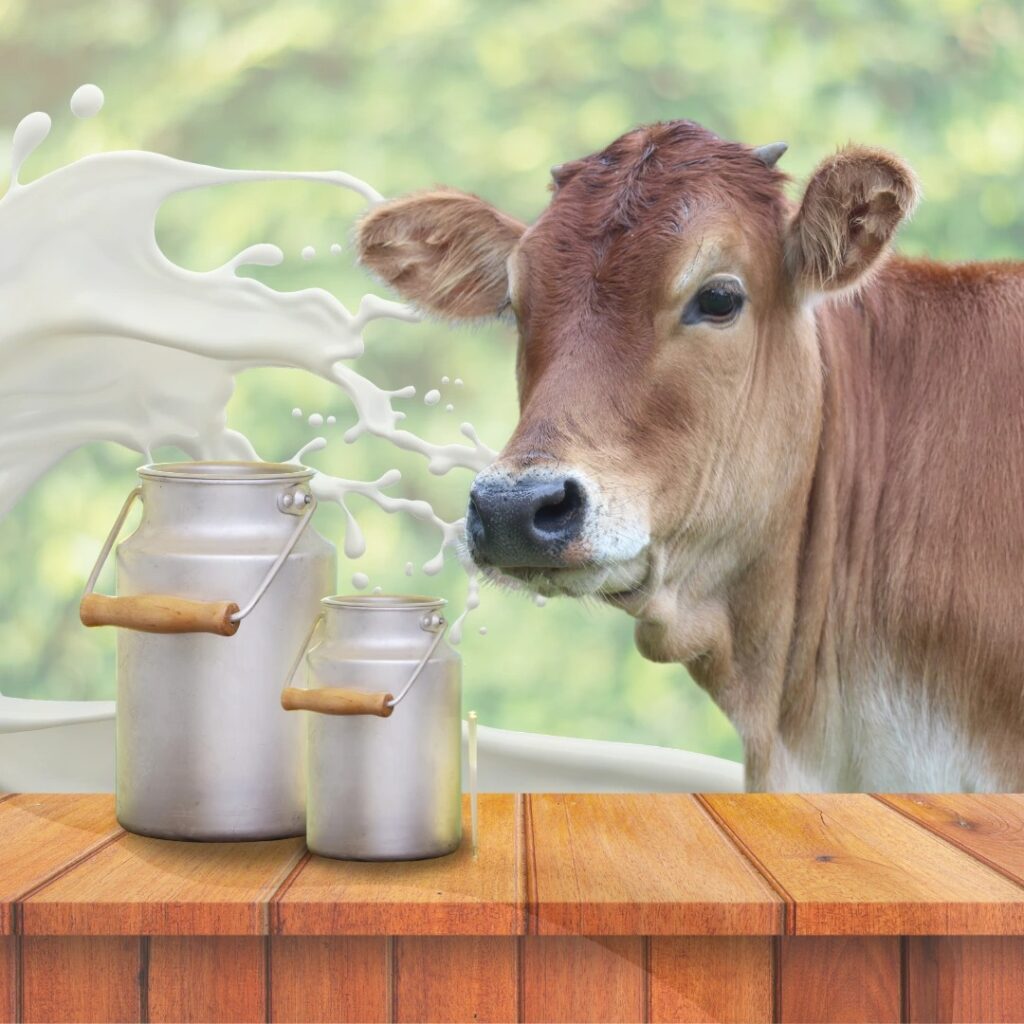
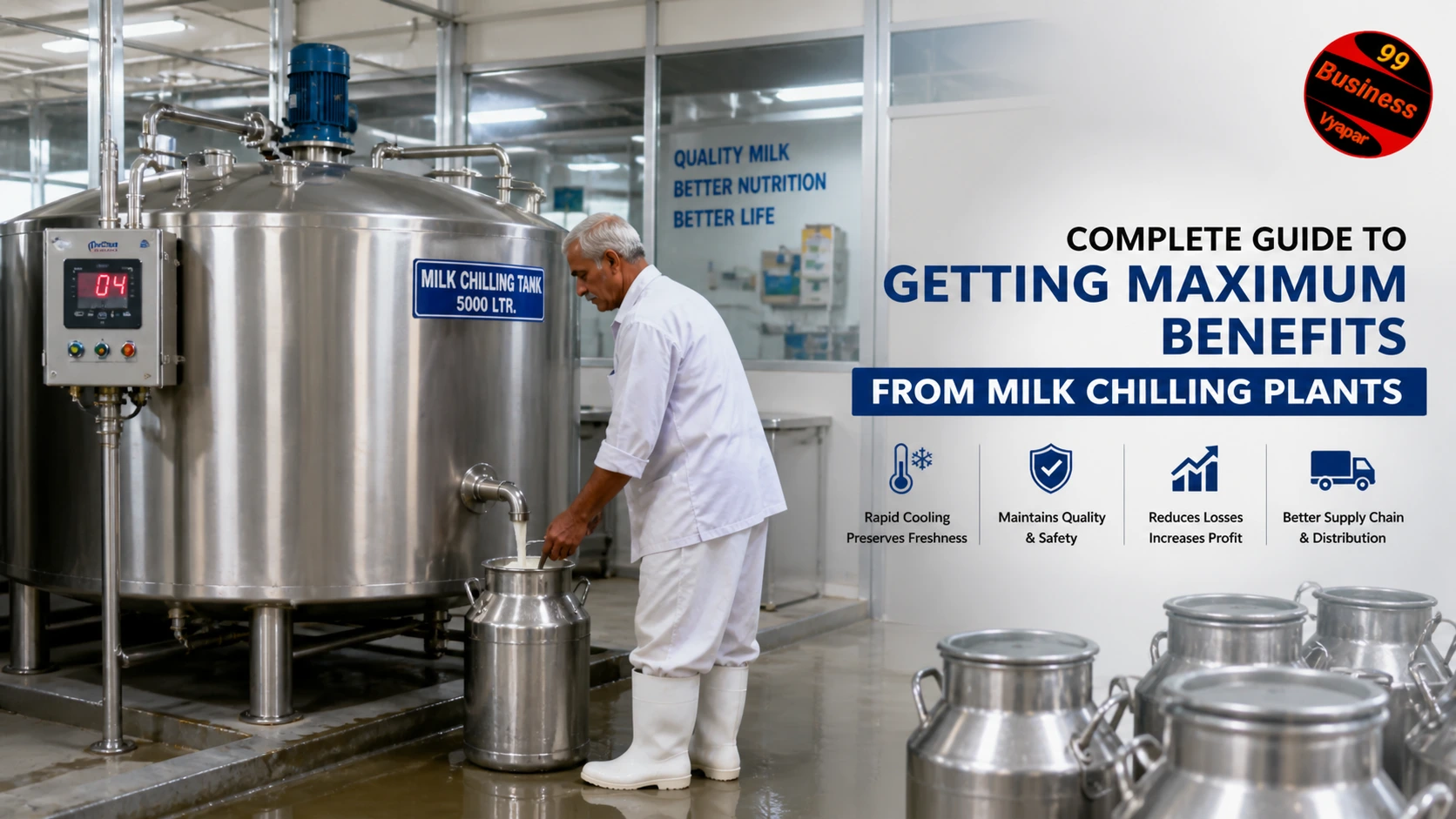
The dairy industry plays a vital role in meeting the daily nutritional needs of millions. The milk product requires immediate treatment after milking because it has high perishable nature. The product will spoil within a short time when it receives inadequate treatment, which results in financial losses for both farmers and dairy businesses. The process of the Milk Chilling Plant has become essential for this situation.
At 99 Business Vyapar Industries, we believe that using the right technology can significantly improve milk quality, extend shelf life, and strengthen the milk supply chain. The complete guide teaches you three things: efficient milk chilling methods, the essential nature of milk chilling, and the milk chilling plants that transform dairy operations.
Understanding Milk Chilling and Its Importance
Milk contains many nutrients that create perfect conditions for bacteria to grow. Bacteria start to multiply in milk after it is extracted from animals, and this process happens most rapidly at warm temperatures. The process requires immediate cooling because it needs milk to be chilled.
What is Chilled Milk Meaning?
The meaning of chilled milk refers to milk that has been quickly cooled to a temperature of approximately 4°C to maintain its freshness while preventing bacterial growth.
The process of milk chilling protects milk from bacterial contamination while allowing it to remain safe for human consumption and to meet requirements for pasteurization, packaging, and distribution processes.
Why Milk Chilling Plants are Essential
Milk chilling plants are specialized systems designed to cool milk quickly and store it under controlled conditions. These plants are a crucial part of the supply chain of milk, especially in rural and semi-urban areas where milk is collected from multiple farmers.
Key Reasons Why Milk Chilling is Important:
- Prevents spoilage and bacterial growth
- Maintains milk quality and taste
- Increases shelf life
- Reduces wastage
- Supports efficient distribution of milk
Without proper chilling, the entire milk supply chain can be disrupted, leading to financial losses and compromised quality.
How Milk Chilling Plants Work
Understanding how to chill milk properly begins with knowing how a milk chilling plant operates.
Basic Working Process:
- Milk Collection
Fresh milk is collected from farmers or dairy farms. - Initial Filtration
The milk is filtered to remove impurities like dust and dirt. - Rapid Cooling
The milk is cooled quickly using refrigeration systems, bringing the temperature down to around 4°C. - Storage in Bulk Tanks
The chilled milk is stored in insulated tanks to maintain temperature. - Transportation
The milk is then transported in refrigerated vehicles for further processing or sale.
This entire process ensures the proper chilling of milk and maintains its quality throughout the distribution of milk.
Milk Chilling Plant Specifications
| Parameter | Specification Details |
|---|---|
| Plant Type | Milk Chilling Plant / Bulk Milk Cooler |
| Capacity | 500 Liters – 10,000 Liters (customizable) |
| Cooling Type | Direct Expansion / Ice Bank System |
| Cooling Time | 2 – 4 Hours (from 35°C to 4°C) |
| Final Milk Temperature | 3°C – 4°C |
| Material of Tank | Stainless Steel (SS 304 Food Grade) |
| Insulation | PUF Insulation for temperature retention |
| Compressor Type | Hermetically Sealed / Scroll Compressor |
| Agitator | Slow Speed Stirrer for uniform cooling |
Benefits of Milk Chilling Plants
Using a milk chilling plant offers several advantages for dairy farmers and businesses.
1. Improved Milk Quality
Rapid cooling helps maintain the natural taste, texture, and nutritional value of milk.
2. Extended Shelf Life
Proper milk chilling slows bacterial growth, allowing milk to stay fresh for a longer time.
3. Reduced Wastage
By preventing spoilage, milk chilling plants significantly reduce product losses.
4. Better Pricing for Farmers
High-quality chilled milk often fetches better prices in the market.
5. Efficient Milk Supply Chain
Milk chilling plants play a key role in strengthening the supply chain of milk, ensuring smooth collection, storage, and transportation.
6. Supports Large-Scale Operations
Enables dairy businesses to handle large volumes of milk efficiently.
Role of Milk Chilling in the Milk Supply Chain
The milk supply chain involves several stages, including production, collection, storage, processing, and distribution. Each stage depends heavily on maintaining milk quality.
Importance in Supply Chain:
- Ensures freshness from farm to consumer
- Maintains consistency in quality
- Supports large-scale distribution of milk
- Reduces losses during transportation
Without proper milk chilling, the entire supply chain of milk can be compromised.
Types of Milk Chilling Systems
There are different types of systems used for milk chilling, depending on the scale of operation.
1. Bulk Milk Coolers (BMC)
Widely used in dairy farms and collection centers for storing large quantities of milk.
2. Instant Milk Chillers
Used for rapid cooling immediately after milking.
3. Ice Bank Tanks
Store ice to provide consistent cooling over time.
Each system is designed to ensure efficient chilling of milk and maintain temperature control.
How to Get Maximum Benefits from Milk Chilling Plants
To fully utilize a milk chilling plant, proper practices and maintenance are essential.
Best Practices:
- Immediate Cooling: Always chill milk right after collection
- Maintain Hygiene: Clean equipment regularly to avoid contamination
- Temperature Monitoring: Keep milk at optimal temperature (around 4°C)
- Regular Maintenance: Ensure machinery is functioning efficiently
- Proper Handling: Avoid unnecessary exposure to heat during transfer
Following these practices helps maximize the benefits of milk chilling and ensures high-quality output.
Challenges in Milk Chilling and Solutions
While milk chilling plants are highly beneficial, there are some challenges involved:
Common Challenges:
- Power supply issues in rural areas
- High initial investment
- Lack of technical knowledge
- Maintenance requirements
Solutions:
- Use energy-efficient systems
- Provide training to operators
- Opt for reliable machinery from trusted providers like 99 Business Vyapar Industries
- Implement backup power solutions
Future of Milk Chilling Technology
The dairy industry is evolving with advancements in technology. Modern milk chilling plants are becoming more efficient, automated, and eco-friendly.
Trends to Watch:
- Smart monitoring systems
- Energy-efficient refrigeration
- Automated cleaning systems
- Integration with the digital milk supply chain management
These innovations will further improve the distribution of milk and enhance overall efficiency.
Why Choose 99 Business Vyapar Industries?
At 99 Business Vyapar Industries, we are committed to providing high-quality milk chilling solutions that meet modern dairy requirements.
Our Key Strengths:
- Advanced and reliable technology
- Energy-efficient systems
- Custom solutions for different scales
- Strong support and service network
We help dairy businesses improve their operations and achieve better results through effective milk chilling solutions.
Conclusion
Milk chilling functions as the essential procedure that supports all aspects of a dairy operation. Proper milk chilling techniques and proper equipment selection help dairy operations achieve better milk quality while minimizing waste and enhancing their milk supply chain operations.
Dairy farmers and businesses can achieve efficient milk distribution through modern milk chilling techniques, which they need to implement according to established best practices.
Your dairy operations will reach new heights through expert solutions from 99 Business Vyapar Industries, which enable you to provide high-quality chilled milk to customers each day.