99 Business Vyapar Industries is a trusted name in the dairy equipment industry. We deliver reliable and efficient milk chiller plant solutions for modern dairy operations. We continue to provide advanced chilling systems that are energy-efficient, durable, and designed to meet the needs of small as well as large dairy operations. With growing demand for fresh and hygienic dairy products, the need for proper chilling of milk has become more important than ever. From small village collection centers to large commercial dairy units, maintaining milk quality starts with effective temperature control.
What is a Milk Chilling Plant?
A milk chilling plant is a specialized system designed to reduce the temperature of freshly collected milk to around 4°C within a short period. This temperature is considered ideal for preserving milk before it is transported to a larger milk processing plant for pasteurization and packaging.
Milk chilling plants are commonly installed at:
- Village milk collection centers
- Dairy farms
- Cooperative societies
- Bulk milk storage facilities
How Does a Milk Chiller Plant Work?
Understanding the working process helps in appreciating the importance of proper cooling and the Milk Chiller Plant. Here’s how the system typically operates:
1. Milk Collection
Fresh milk is collected from farmers and transferred into a receiving tank. At this stage, the milk temperature is usually around 30–37°C.
2. Pre-Filtration
The milk passes through filters to remove dust, hair, or other impurities. Clean milk improves the efficiency of the chilling system.
3. Rapid Cooling Process
The milk is then pumped into a bulk milk cooler or plate heat exchanger. Inside the Milk Chiller Plant, refrigeration systems circulate chilled water or refrigerant around the milk tank. Heat from the milk is absorbed and removed.
This rapid chilling of milk brings the temperature down to 4°C within a short time, significantly slowing bacterial growth.
4. Storage
Once cooled, the milk is stored in insulated stainless-steel tanks until it is transported to the milk processing plant for further processing, such as pasteurization, homogenization, and packaging.
Also Read: Milk Pasteurization Process: Steps, Methods and Benefits
Components of a Milk Chiller Plant
A well-designed Milk Chiller Plant consists of several key components:
- Bulk milk cooler tank
- Refrigeration compressor
- Condenser and evaporator
- Agitator for uniform cooling
- Control panel
- Insulated storage tank
99 Business Vyapar Industries focuses on manufacturing robust systems using high-quality stainless steel and advanced refrigeration technology. Our systems are built to handle varying capacities depending on customer requirements.
Types of Milk Chilling Plants
Different dairy setups require different capacities. Some common types include:
1. Bulk Milk Coolers (BMC)
Ideal for small and medium dairy farms. These units are compact and efficient for daily milk collection.
2. Centralized Milk Chilling Units
Used in large cooperative societies or regional dairy hubs where milk from multiple villages is collected.
3. Plate Chillers
Used for rapid cooling before transferring milk to storage tanks in large-scale milk processing plant setups.
99 Business Vyapar Industries continues to provide customized solutions based on operational scale and budget.
Benefits of Proper Cooling and Chilling of Milk
Installing a milk chilling plant offers several advantages:
- Maintains milk freshness and taste
- Reduces bacterial growth
- Minimizes spoilage losses
- Ensures compliance with dairy quality standards
- Increases shelf life
- Improves the overall efficiency of milk processing plant operations
For dairy entrepreneurs, this translates into higher profitability and stronger relationships with processing companies.
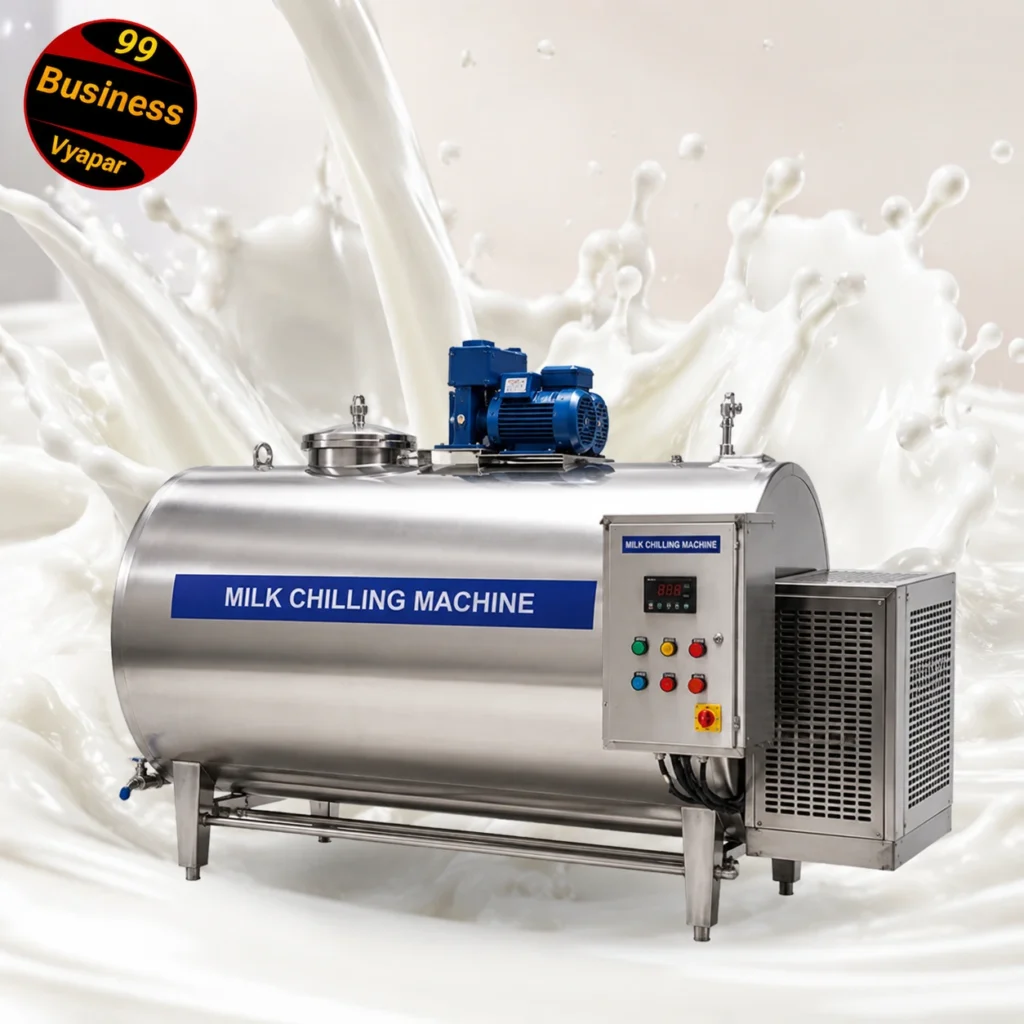
Milk Chilling Machine in India
A milk chilling machine in India plays a vital role in maintaining the quality and freshness of milk across the dairy supply chain. The demand for effective cooling systems has grown substantially since India ranks as one of the world’s top milk-producing countries. The machines operate at dairy farms, milk collection centers, and processing plants to achieve rapid temperature reduction, which helps maintain the freshness of raw milk.
What is a Milk Chilling Machine?
The milk chilling machine uses refrigeration technology to bring fresh milk, which has been collected from farms, down to a temperature range of 2°C to 4°C starting from a temperature of 35°C within a brief period. The system achieves fast cooling, which reduces bacterial development while maintaining milk nutritional content until processing or transportation begins.
Importance in the Indian Dairy Industry
In India, milk is often collected from rural areas and transported over long distances. Without proper cooling, the Milk Chiller Plant can spoil quickly. A milk chilling machine ensures:
- Safe storage of milk
- Improved shelf life
- Better quality for processing
It is especially important for dairy cooperatives, private dairies, and small-scale farmers who want to maintain consistent product quality.
Types of Milk Chilling Machines in India
- Bulk Milk Coolers (BMC): Used in large dairy plants and collection centers
- Direct Expansion Chillers: Fast cooling with a built-in refrigeration system
- Ice Bank Tank (IBT) Systems: Energy-efficient cooling using stored ice
Each type is designed based on capacity, usage, and operational requirements.
Key Features
- Food-grade stainless steel construction
- Fast and uniform cooling system
- Energy-efficient performance
- Digital temperature control
- Low-maintenance design
Why Choose 99 Business Vyapar Industries?
Choosing the right manufacturer is as important as choosing the right equipment. 99 Business Vyapar Industries has built a reputation for reliability, quality manufacturing, and customer support. Our systems are:
- Made with food-grade stainless steel
- Designed for easy cleaning and maintenance
- Built for long service life
- Customizable as per dairy requirements
- Backed by dependable after-sales support
Our company continues to provide comprehensive dairy equipment solutions that help farmers and dairy operators grow their businesses confidently.
Conclusion
The dairy industry depends heavily on proper temperature control. Effective chilling of the Milk Chiller Plant ensures freshness, safety, and quality from farm to processing unit. A well-designed milk chilling plant plays a crucial role in maintaining standards and preventing financial losses.
With advanced technology, strong construction, and efficient cooling systems, 99 Business Vyapar Industries delivers dependable solutions for modern dairy needs. Investing in the right system for cooling the Milk Chiller Plant not only protects product quality but also strengthens the entire milk processing plant chain for long-term success.
The demand for Milk Chiller Plant in India is growing rapidly as the dairy industry continues to modernize. A business should invest in a dependable chilling system because it protects product quality and boosts its financial returns. A Milk Chiller Plant works as a fundamental requirement for establishing successful dairy operations at both small and large dairy facilities.