Milk is among the most widely consumed foodstuffs due to its high nutritional value and versatility. But fresh milk obtained directly from dairy farms can harbor dangerous microorganisms, which might impact its quality and consumption safety. It is here that milk pasteurization comes into play as an important step in the process of dairy production.
At 99 Business Vyapar Industries, we are fully aware of the significance of dairy processing techniques that make it possible for us to offer safe and high-quality milk products. If you are a dairy business owner or just want to learn more about dairy processing, then you should know everything about the milk pasteurization process.
Here, we will cover all the aspects of the subject, including what is pasteurization of milk and other important factors.
What Is Pasteurization of Milk?
Many people frequently raise questions such as what is pasteurization of milk entails.
Pasteurization is a technique through which heat is applied in a regulated way to eliminate all the dangerous germs or organisms contained in fresh milk while keeping the milk’s nutritional content and flavor intact.
The process was invented by the renowned French chemist Louis Pasteur, who contributed immensely to food safety. The use of pasteurization milk technology has gained popularity across the globe to ensure the safety of the milk consumed by humans.
In essence, pasteurization of milk refers to heating milk at a specific temperature for a certain amount of time before quick cooling.
Why Is Milk Pasteurization Important?
Raw milk may contain various microorganisms, including harmful bacteria that can cause foodborne illnesses.
Without proper treatment, milk can become unsafe for consumption and may spoil quickly.
The primary objectives of milk pasteurization include:
- Eliminating harmful bacteria
- Improving milk safety
- Extending shelf life
- Maintaining nutritional quality
- Preserving taste and freshness
- Reducing product wastage
- Meeting food safety standards
These benefits make pasteurization a critical process for dairy farms and milk processing plants.
The Science Behind the Milk Pasteurization Process
The milk pasteurization process is based on a simple scientific principle.
Most harmful microorganisms cannot survive exposure to high temperatures. By heating milk to a carefully controlled temperature and then cooling it immediately, dairy processors can eliminate dangerous bacteria while preserving the milk’s nutritional content.
The success of pasteurization depends on:
- Correct heating temperature
- Appropriate holding time
- Rapid cooling
- Hygienic processing conditions
Modern dairy equipment ensures these parameters are maintained consistently throughout production.
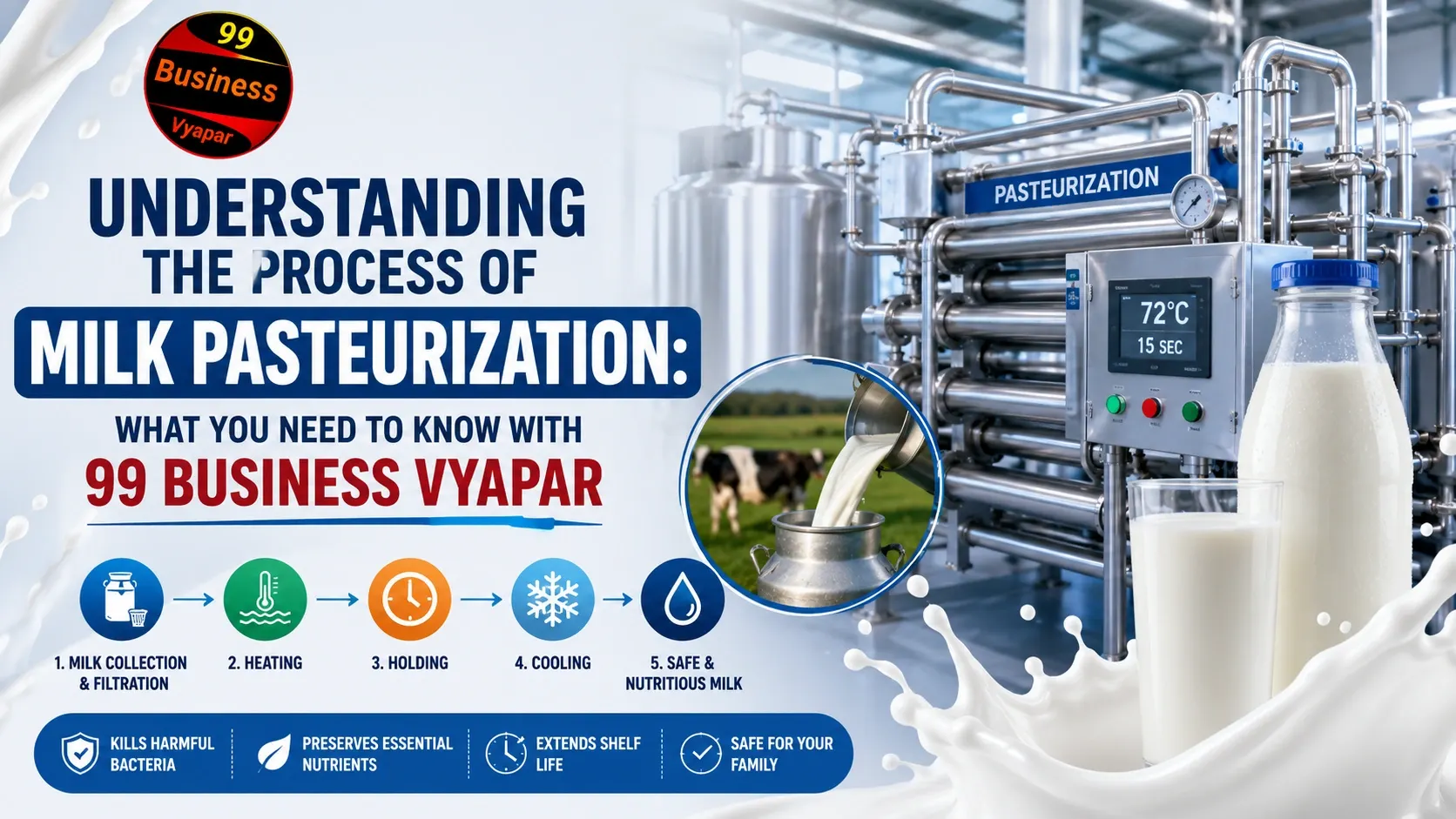
Step-by-Step Milk Pasteurization Process
Understanding the complete milk pasteurization process helps dairy operators maintain quality and efficiency.
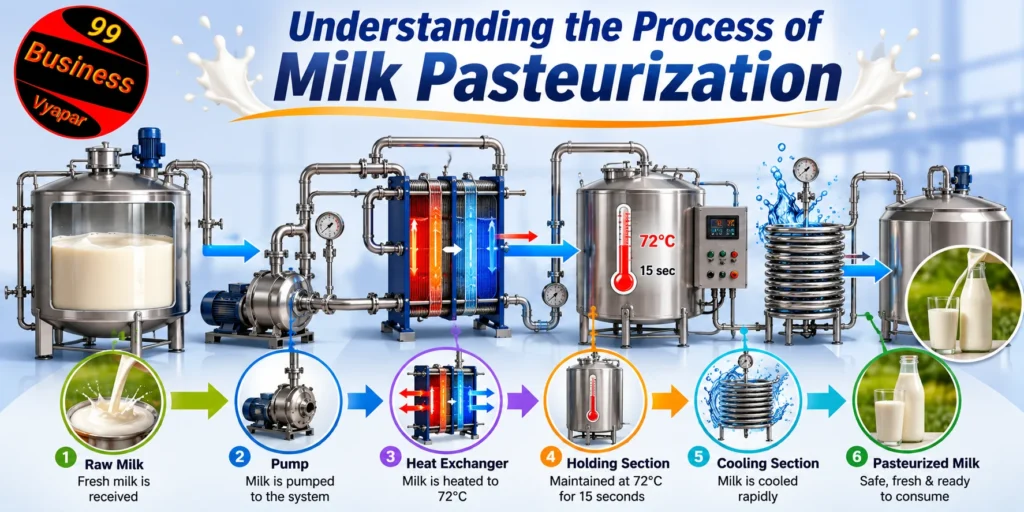
Step 1: Milk Collection
Fresh milk is collected from dairy farms and transported to processing facilities under hygienic conditions.
Step 2: Filtration and Clarification
Milk passes through filters to remove dirt, dust, and unwanted particles before processing begins.
Step 3: Standardization
The fat content is adjusted according to product requirements to achieve consistent quality.
Step 4: Heating
The milk is heated to a specific temperature using specialized pasteurization equipment.
Step 5: Holding Time
Milk remains at the required temperature for a controlled duration to destroy harmful microorganisms.
Step 6: Rapid Cooling
Immediately after heating, the milk is cooled to a low temperature to prevent bacterial growth.
Common Methods of Pasteurization Milk
Different dairy applications use different pasteurization techniques.
HTST (High Temperature Short Time)
This is the most commonly used method in commercial dairy plants.
Milk is heated to approximately 72°C for 15 seconds and then rapidly cooled.
Benefits include:
- High processing efficiency
- Excellent product quality
- Better nutrient retention
- Suitable for large-scale production
LTLT (Low Temperature Long Time)
In this method, milk is heated to around 63°C for 30 minutes.
It is commonly used in small dairy operations and specialty dairy products.
UHT (Ultra High Temperature)
Milk is heated to extremely high temperatures for a few seconds.
Advantages include:
- Extended shelf life
- Reduced refrigeration requirements
- Convenient storage and transportation
Each method serves specific production requirements depending on the target market.
Benefits of Pasteurisation of Milk
Enhanced Consumer Safety
The most important advantage of pasteurisation of milk is protection against harmful bacteria and pathogens.
Longer Shelf Life
Pasteurized milk remains fresh for a longer period compared to raw milk.
Consistent Quality
The process ensures uniform product quality throughout production batches.
Reduced Product Losses
Lower spoilage rates help dairy businesses improve profitability.
Improved Market Acceptance
Consumers prefer safe and certified dairy products, increasing demand for pasteurized milk.
Does Pasteurization Affect Milk Nutrition?
One of the most common concerns about pasteurization milk is whether it affects nutritional value.
The answer is that most essential nutrients remain intact after pasteurization.
Milk continues to provide:
- Calcium
- Protein
- Potassium
- Phosphorus
- Vitamins
- Essential minerals
While minor changes may occur in certain heat-sensitive vitamins, the overall nutritional quality remains highly beneficial.
Equipment Used in Milk Pasteurization
Modern dairy plants rely on advanced machinery to perform the milk pasteurization process efficiently.
Common equipment includes:
- Milk receiving tanks
- Milk storage tanks
- Plate heat exchangers
- Pasteurizers
- Homogenizers
- Cooling systems
- CIP cleaning systems
- Packaging machines
The use of advanced equipment ensures consistency, hygiene, and operational efficiency.

Challenges in Milk Pasteurization
Although highly effective, pasteurization requires careful monitoring.
Some common challenges include:
- Temperature fluctuations
- Equipment maintenance
- Energy consumption
- Contamination risks
- Process control requirements
Proper plant design and quality management systems help overcome these challenges.
The Future of Milk Pasteurization
The dairy industry continues to adopt innovative technologies that improve efficiency and sustainability.
Emerging trends include:
- Automated process controls
- Energy-efficient pasteurizers
- Smart monitoring systems
- Advanced heat recovery technology
- Improved food safety solutions
These advancements help dairy processors reduce costs while maintaining superior product quality.
Why Choose 99 Business Vyapar Industries?
With 99 Business Vyapar Industries, our main aim is to assist the dairy sector in adopting reliable processing methodologies and understanding the industry.
We ensure that dairy companies learn about modern processing methodologies, increase efficiency, and production quality.
Our focus includes:
- Dairy processing equipment information
- Milk plant solutions
- Pasteurization systems
- Dairy automation technologies
- Quality-focused manufacturing guidance
Our goal is to help dairy entrepreneurs make informed decisions for long-term business growth.
Conclusion
It is necessary to know about what is pasteurization of milk for those who deal with milk manufacturing. Milk pasteurization procedure is very crucial in keeping milk safe, preserving milk life span, and in maintaining its quality.
In terms of safety from pathogens, consumer trustworthiness, and others, milk pasteurization still proves to be one of the best discoveries made in milk manufacturing. As technology keeps advancing, it will be possible to enhance the process of pasteurization in the dairy industry and increase efficiency in their business operation.
Insights from 99 Business Vyapar Industries will help dairy people get a clear picture of what is pasteurization of milk.