99 Business Vyapar, a well known manufacturer of milk processing plants aware about the safety and hygiene standards of milk products, offers high quality milk processing plants. Pasteurization is one of the most important processes in the food and beverage industry, ensuring product safety, improved shelf life, and consistent quality.
From milk and dairy products to juices, sauces, and liquid foods, pasteurization plays a critical role in protecting consumers from harmful microorganisms while maintaining nutritional value. We help businesses connect with reliable food processing solutions and equipment suppliers related to pasteurization and allied technologies.
Definition of Pasteurization
Pasteurization is a heat treatment process in which food or liquid products are heated to a specific temperature for a defined period and then rapidly cooled. The primary purpose of pasteurization is to destroy or deactivate harmful bacteria, pathogens, and microorganisms that can cause foodborne illnesses, while minimizing changes to taste, texture, and nutritional content.
Unlike sterilization, pasteurization does not kill all microorganisms. Instead, it significantly reduces the microbial load to safe levels, making the product suitable for consumption and extending its shelf life under proper storage conditions. Pasteurization is widely used in dairy, beverage, food processing, and pharmaceutical industries.
Types of Pasteurization
Different types of pasteurization are used depending on the product, desired shelf life, and processing capacity. Each method has its own advantages and applications.
Low-Temperature Long-Time (LTLT) Pasteurization
Low-Temperature Long-Time pasteurization involves heating the product to around 63°C for 30 minutes. This method is commonly used in small-scale dairy operations and traditional milk processing. LTLT pasteurization is gentle and helps preserve the natural flavor of the product. However, it is time-consuming and less suitable for high-volume industrial production.
High-Temperature Short-Time (HTST) Pasteurization
High-Temperature Short-Time pasteurization heats the product to approximately 72°C for 15 seconds, followed by rapid cooling. This is one of the most widely used pasteurization methods in the dairy industry. HTST offers a good balance between microbial safety and quality retention, making it suitable for large-scale milk and beverage processing. It is more efficient than LTLT and supports continuous processing.
Ultra-High Temperature (UHT) Pasteurization
UHT pasteurization involves heating the product to 135–150°C for 2–5 seconds. This process destroys almost all microorganisms, resulting in products with a much longer shelf life, often without the need for refrigeration until opened. UHT is commonly used for milk, cream, juices, and liquid foods intended for long-distance distribution. The process slightly alters taste compared to HTST but offers excellent storage convenience.
Batch Pasteurization
Batch pasteurization is a controlled process where a fixed quantity of product is heated and held at a required temperature before cooling. This method is often used for specialty products, artisanal foods, and small production volumes. While it offers flexibility, it is less efficient for large-scale manufacturing.
Importance of Pasteurization in Microbiology
Pasteurization plays a crucial role in microbiology by significantly reducing the number of harmful microorganisms present in food and liquid products. It helps in destroying pathogenic bacteria such as Salmonella, Listeria, E. coli, and Mycobacterium tuberculosis, which are responsible for foodborne diseases. By controlling microbial growth, pasteurization ensures food safety while maintaining the nutritional and sensory quality of products.
From a microbiological perspective, pasteurization also helps slow down enzyme activity and spoilage caused by microbes, thereby extending shelf life. It allows microbiologists and food technologists to maintain microbial levels within safe limits without complete sterilization.
Pasteurization Process – Step by Step
The pasteurization process follows a systematic approach to ensure safety and quality:
First, the raw product such as milk, juice, or liquid food is filtered and pre-treated to remove visible impurities. Next, the product is heated to the required pasteurization temperature based on the selected method (LTLT, HTST, or UHT). During this heating phase, harmful microorganisms are destroyed or inactivated.
After holding the product at the target temperature for the specified time, it is rapidly cooled to prevent bacterial growth and maintain product quality. Finally, the pasteurized product is transferred to hygienic packaging under controlled conditions. This process ensures food safety while preserving essential nutrients and taste. Equipment and processing solutions listed on 99 Business Vyapar help manufacturers implement efficient pasteurization systems.
Comparison of Pasteurization Methods
When comparing different pasteurization techniques, several factors must be considered, including temperature, processing time, shelf life, and product quality. LTLT pasteurization uses lower temperatures and longer time, preserving taste but limiting production capacity. HTST pasteurization offers higher efficiency, better throughput, and good quality retention, making it ideal for commercial dairy operations.
UHT pasteurization provides the longest shelf life and maximum microbial reduction but may slightly affect flavor due to high temperatures. Batch pasteurization offers flexibility but is less suitable for high-volume continuous production. Choosing the right method depends on business scale, distribution requirements, and consumer expectations. Through platforms like 99 Business Vyapar, businesses can explore equipment options and suppliers to match their processing needs.
Benefits of Milk Pasteurization
- Eliminates harmful bacteria and pathogens
- Ensures safe and hygienic milk for consumption
- Extends the shelf life of milk
- Preserves nutritional value and natural taste
- Reduces the risk of foodborne diseases
- Improves overall milk quality and consistency
Uses of Pasteurized Milk
- Direct consumption as packaged drinking milk
- Production of dairy products like curd, butter, cheese, and yogurt
- Used in ice cream and flavored milk manufacturing
- Applied in bakeries and confectionery products
- Suitable for institutional and commercial dairy use.
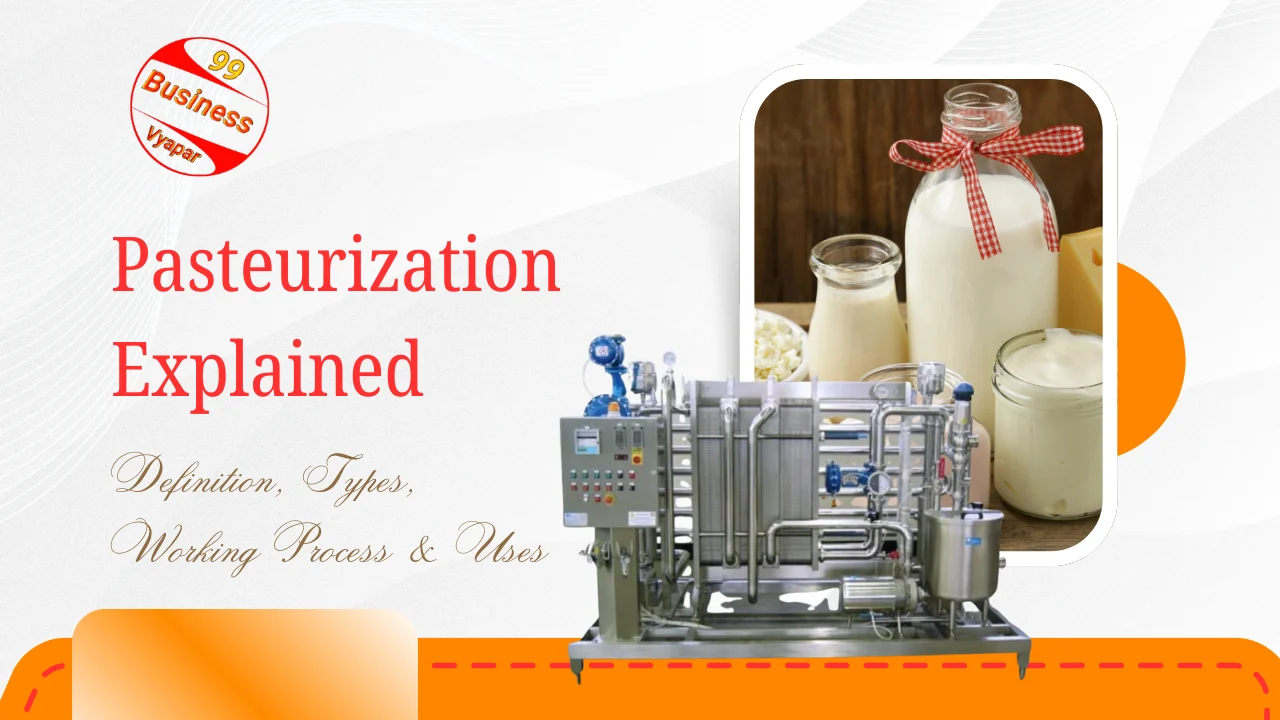
Milk Pasteurizer in Dairy Industry
In modern dairy operations, milk pasteurizers support hygienic processing, extended shelf life, and compliance with food safety standards. They are widely used in milk collection centers, dairy plants, and processing units to deliver safe and high-quality milk to consumers. The dairy industry used to heat raw milk to a specific temperature for a defined time to eliminate harmful microorganisms. This process ensures milk safety while preserving its nutritional value, taste, and quality.
Conclusion
Pasteurization is a cornerstone of modern food and beverage processing, ensuring safety, quality, and extended shelf life. With different types such as LTLT, HTST, and UHT, businesses can choose the most suitable method based on product requirements and production scale. Understanding the pasteurization process, its comparison, and applications helps manufacturers deliver safe and high-quality products to consumers. With industry support and business connections provided by 99 Business Vyapar, companies can access the right solutions to implement effective pasteurization systems and grow sustainably in a competitive market.