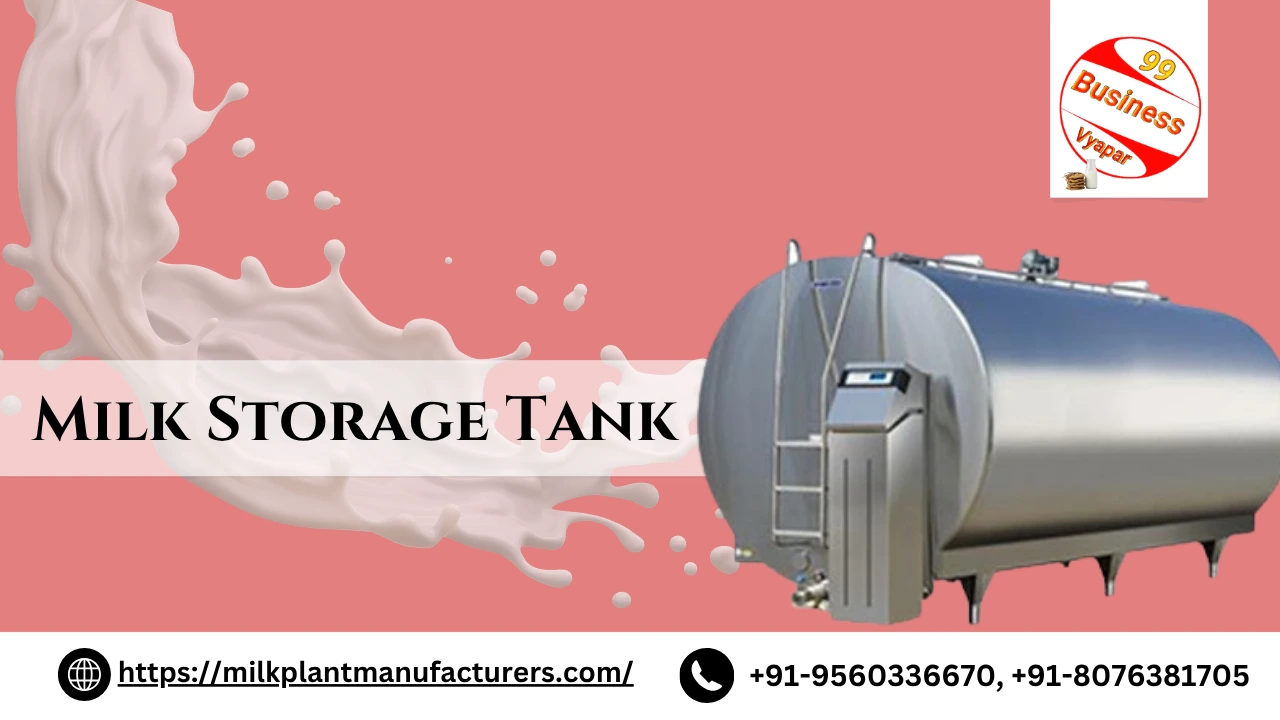
Milk quality needs to be maintained from collection until processing in the dairy and food processing industry because it holds vital importance for the industry. A milk storage tank plays a vital role in preserving freshness, preventing contamination, and ensuring safe handling of milk. The choice of milk storage tanks affects both operational efficiency and product quality in a dairy farm and processing unit because each facility requires its own solution.
The blog by 99 Business Vyapar Industries explains various milk storage tank types. The blog presents information about milk storage tanks through a simple and human-friendly approach, which shows their practical uses.
What is a Milk Storage Tank?
A milk storage tank is a specialized container designed to store raw or processed milk under controlled conditions. The tanks maintain milk temperature while preventing bacterial growth and maintaining the milk’s natural characteristics until it reaches further processing or transportation stages.
The design of modern milk tanks includes stainless steel construction and insulation, along with cooling systems and agitation mechanisms, which help maintain product quality throughout storage.
Importance of Milk Storage Tanks in Dairy Operations
Milk is a highly perishable product, and even slight temperature changes can affect its quality. A reliable milk tank ensures:
- Proper temperature control
- Protection from contamination
- Preservation of taste and nutrients
- Smooth handling during collection and distribution
- Extended shelf life before processing
Without an efficient milk storage tank, maintaining hygiene and quality becomes a challenge.
Types of Milk Storage Tanks
Different types of milk storage tanks are used depending on capacity, application, and operational needs. Below are the most commonly used types:
1. Bulk Milk Cooling Tank
A bulk milk storage tank design is widely used on dairy farms to rapidly cool fresh milk after milking. It helps bring down the temperature quickly to slow bacterial growth.
Key features:
- Rapid cooling system
- Temperature control mechanism
- Available in various capacities
- Suitable for farm-level storage
Purpose:
To preserve milk freshness immediately after milking and prepare it for transportation.
2. Vertical Milk Storage Tank
A vertical milk storage tank is designed in an upright cylindrical shape, making it ideal for facilities with limited floor space.
Key features:
- Space-saving design
- High storage capacity
- Strong and durable structure
- Easy cleaning and maintenance
Purpose:
Used in dairy plants and processing units where space optimization is required while storing large volumes of milk.
3. Horizontal Milk Storage Tank
Unlike vertical tanks, horizontal milk tanks are placed flat on the ground. They are commonly used where height restrictions exist.
Key features:
- Stable design
- Easy installation
- Suitable for large storage volumes
- Efficient temperature retention
Purpose:
Ideal for milk storage tank 500 ltr price and transportation in dairy industries and collection centers.
4. Insulated Milk Storage Tank
An insulated stainless steel milk storage tank is designed with thermal insulation layers to maintain milk temperature for longer durations without frequent cooling.
Key features:
- Thermal insulation
- Energy-efficient
- Maintains consistent temperature
- Reduces cooling load
Purpose:
To store milk safely over extended periods while minimizing temperature fluctuations.
5. Jacketed Milk Storage Tank
A jacketed milk tank includes an outer layer (jacket) through which a cooling medium circulates.
Key features:
- Double-wall structure
- Cooling or heating capability
- Uniform temperature distribution
- High efficiency
Purpose:
Used in processing plants where controlled heating or cooling is required during storage.
6. Portable Milk Storage Tank
Portable milk tanks are smaller and mobile units designed for easy transportation.
Key features:
- Compact size
- Mobility
- Easy handling
- Suitable for small-scale operations
Purpose:
Ideal for small dairy farms, milk collection points, or short-distance transportation.
Materials Used in Milk Storage Tanks
Most modern milk tanks are made using food-grade stainless steel because it:
- Prevents contamination
- Is corrosion-resistant
- Ensures durability
- Is easy to clean and sanitize
- Maintains hygiene standards
This makes stainless steel the preferred material for any raw milk storage tank used in commercial dairy operations.
Factors to Consider When Choosing a Milk Tank
Selecting the right milk tank depends on several factors:
- Storage capacity requirements
- Type of dairy operation
- Available space
- Cooling requirements
- Budget and energy efficiency
- Maintenance needs
A well-chosen tank ensures smooth operations and long-term reliability.
Applications of Milk Storage Tanks
Milk storage tanks are used across various sectors, including:
- Dairy farms
- Milk collection centers
- Dairy processing plants
- Ice cream and cheese manufacturing units
- Beverage industries
They play a crucial role in maintaining the cold chain and ensuring product quality.
Conclusion
Modern dairy operations depend on milk storage tanks, which function as vital systems that maintain milk freshness and safety until milk processing and distribution activities begin. The various types of bulk milk cooling tanks and insulated and jacketed tanks serve distinct functions based on different operational requirements.
At 99 Business Vyapar Industries, we understand the importance of reliable storage solutions in the dairy industry. The selection of an appropriate milk storage tank 1000 ltr price system enables operational efficiency, which maintains product quality and sanitary standards throughout the entire distribution process.